Saramed’s Women Clinic

FAQ's

Faq's

Frequently Asked Question

How soon should I call once I discover I’m pregnant?

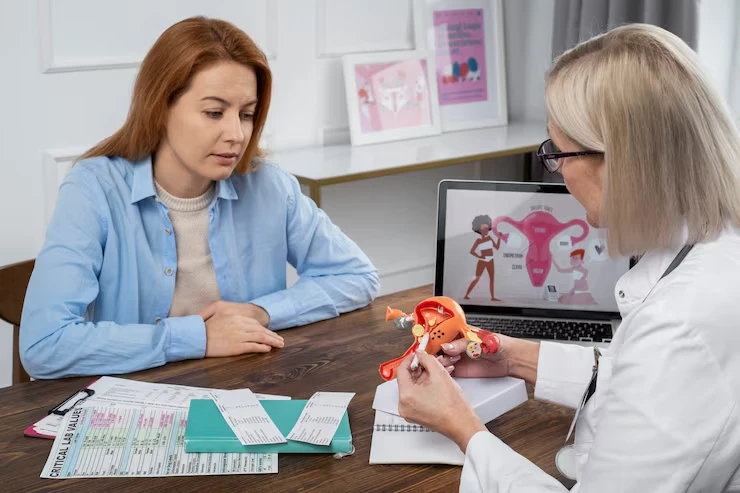
Straight away. We recommend you book a time to see Guy for when you are between 8 to 10 weeks pregnant – or 4 weeks after your last, missed period. This allows us to do a dating scan, where we can establish the exact age of your baby, and a likely due date. If Guy does the scan too early, we will not be able to see the baby properly in the scan.

No. The dating scan will be conducted as part of your first visit.

You won’t require any blood tests before seeing Guy. During your first visit, Guy will discuss your health history and determine what tests you might need. You’ll then need to have those tests before your next visit. If you have had some tests or scans completed prior to your first visit please bring these with or forward them to our rooms.

There are four highly experienced doctors who cover for Guy if he is away. The five doctors, including Guy are part of a roster of Obstetricians and Gynaecologists who all provide cover for the others. They are Dr Lionel Steinberg, Dr David O’Callaghan, Dr Megan Di Quinzio and Dr Tom Cade.

In all probability, Guy will deliver your baby. He delivers over 96% of our patient’s babies. If he is away when you give birth, you’ll have one of the highly-qualified Obstetricians on our roster on hand.

Three main things will happen.

If you are dues to give birth while Guy is scheduled away, or if there is a chance you’ll give birth during this time, Guy will let you know, and introduce you to the Obstetrician who’ll be looking after you. He will also ensure the consulting Obstetrician knows your details and is aware of your information before he leaves.

Guy is part of a roster of some of Melbourne’s best Obstetricians and Gynaecologists who cover for each other at times like these. Each of these doctors is highly experienced and will be able to help you through the birth.

Guy will check-in with you, and the rostered obstetrician, when he returns. To see how you’re going. To see how your new baby is. And to understand how the birth went.
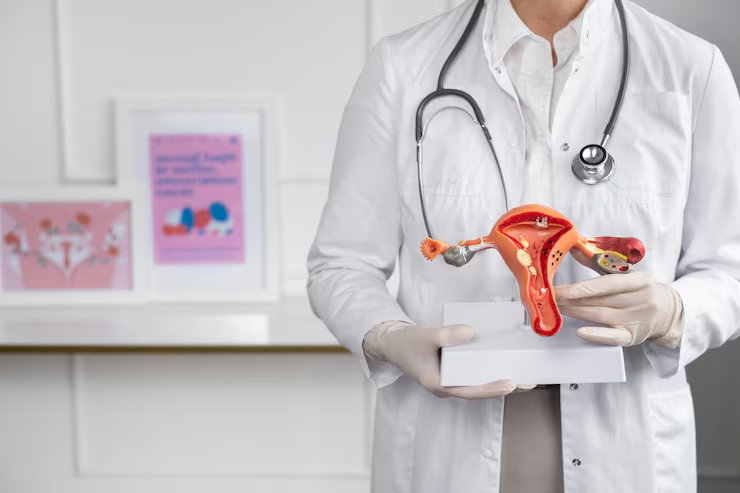
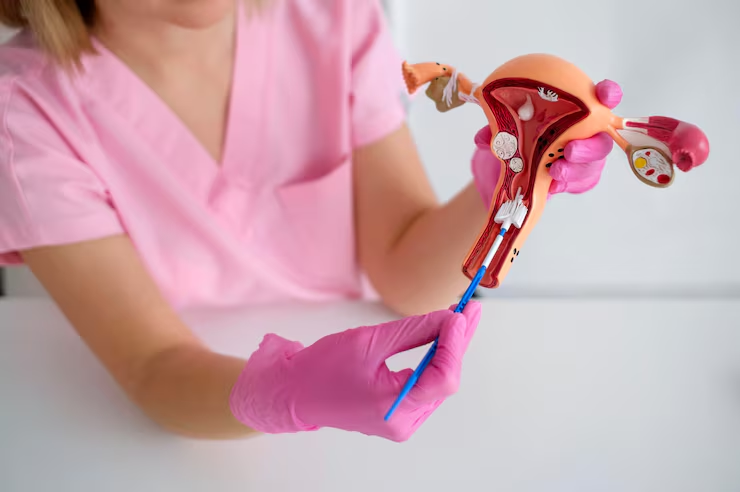
Cervical-Screening

Cervical Screening

Cervical Screening is a simple medical test used to check the health of the cervix — the lower part of the uterus that opens into the vagina. The main purpose of cervical screening is to detect early changes in cervical cells that could potentially develop into cervical cancer if left untreated.

Cervical-Vulval-biopsy

Cervical Vulval Biopsy

A cervical/vulval biopsy is a medical procedure where a small tissue sample is taken from the cervix or vulva for laboratory examination. It helps detect abnormal cells, infections, or cancerous changes, enabling early diagnosis and guiding appropriate treatment options.

Endometrial-Biopsy

Endometrial Biopsy

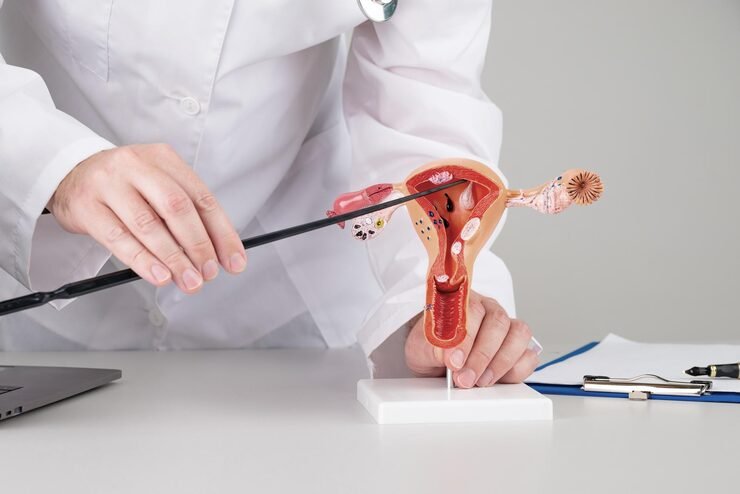
An endometrial biopsy is a medical procedure in which a small tissue sample is taken from the lining of the uterus (endometrium) to detect abnormalities. It helps diagnose causes of irregular bleeding, infertility, and screen for conditions such as endometrial hyperplasia or cancer.

Hysterectomy

Excision of Cervical Polyps

Excision of cervical polyps is a minor gynecological procedure to remove small growths from the cervix. It is typically performed to relieve symptoms like bleeding or discharge, or to rule out rare precancerous changes, ensuring cervical health and preventing complications.

Colposcopy

Colposcopy

Colposcopy is a medical diagnostic procedure used to closely examine the cervix, vagina, and vulva for signs of disease. It is often recommended after abnormal Pap smear results. The procedure helps detect precancerous changes, infections, or other abnormalities with clarity and precision

Contraception advice and procedures

Contraception Advice and Procedures

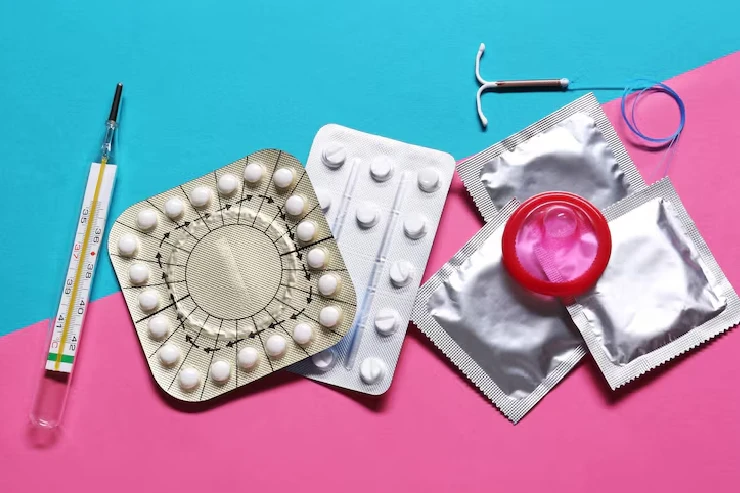
Contraception advice and procedures provide individuals with guidance and medical options to prevent unintended pregnancies. From counseling on suitable methods to safe and effective clinical procedures, these services empower people to make informed reproductive health choices.

Hysterectomy

Hysterectomy

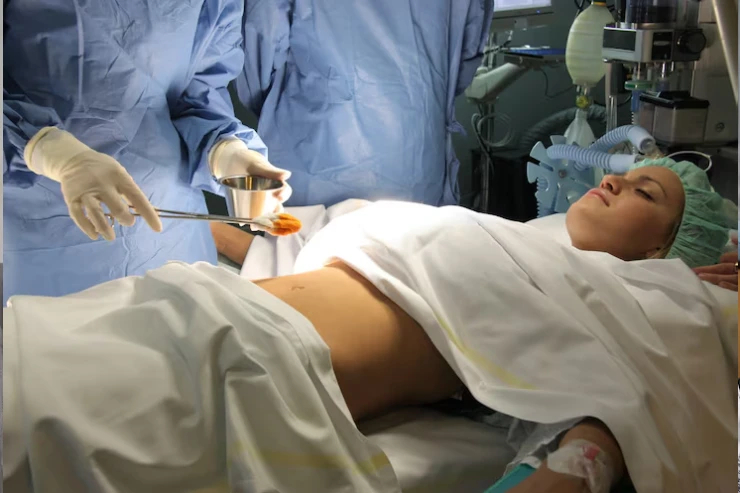
A hysterectomy is a surgical procedure to remove a woman’s uterus. It may be recommended for conditions such as fibroids, endometriosis, chronic pelvic pain, abnormal bleeding, or cancer. Depending on the case, the cervix, ovaries, or fallopian tubes may also be removed.

Surgical management of miscarriage

Surgical Management of Miscarriage

Surgical management of miscarriage is a medical procedure used to remove pregnancy tissue after a miscarriage. It is usually performed when natural expulsion is incomplete, to prevent infection, control bleeding, and support physical recovery while offering emotional reassurance.

Treatment of-prolapse

Treatment of Prolapse

Treatment of prolapse focuses on restoring the normal position of pelvic organs and improving quality of life. Options include lifestyle changes, pelvic floor exercises, use of pessaries, or surgery depending on severity, symptoms, and individual health needs.

Cervical-Screening

Fibroid Removal

Fibroid removal is a medical procedure to eliminate noncancerous growths (fibroids) that develop in or around the uterus. Treatment options include minimally invasive surgery, laparoscopic methods, or open surgery. It helps relieve symptoms like pain, bleeding, and fertility issues.

Endometrial-Ablation

Endometrial Ablation

Endometrial ablation is a minimally invasive medical procedure that removes or destroys the lining of the uterus (endometrium) to reduce or stop heavy menstrual bleeding. It is usually recommended for women who have not responded to other treatments and do not plan future pregnancies.

Laparoscopy-Diagnostic-Operative

Laparoscopy

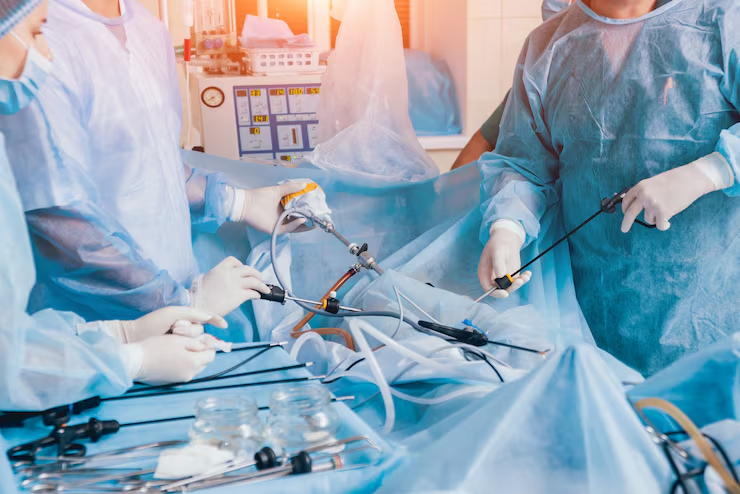
Laparoscopy is a minimally invasive surgical technique that uses small incisions and a camera (laparoscope) to view and treat conditions inside the abdomen or pelvis. It offers faster recovery, less pain, reduced scarring, and shorter hospital stays compared to traditional surgery.

Hysteroscopy-Diagnostic-Operative

Hysteroscopy

Hysteroscopy is a minimally invasive procedure that allows doctors to examine the inside of the uterus using a thin, lighted tube called a hysteroscope. It helps diagnose and treat conditions such as abnormal bleeding, fibroids, polyps, or adhesions, often improving fertility and uterine health.